

 English
 Español
 عربى
We are a national high-tech enterprise. At present, there are many kinds of self-woven and cooperatively processed fabrics, including microfiber warp-knitted towel cloth, weft-knitted towel cloth, coral fleece, etc.
Content
A sherpa blanket is easy to recognize by touch alone. The surface is curly and dense, closer to sheepskin than to a flat woven throw, and it traps far more warmth than its weight suggests. That combination is why sherpa has held its place in throws, bed runners and winter bedding for so many years.
If you buy blankets for a living, though, the word "sherpa" does not tell you nearly enough. It describes a surface as much as a material, and the quality you actually receive depends on pile height, backing, bonding and the way the edges are finished. This guide walks through what sherpa really is, how it is built, and what to confirm before you place an order.
What Is a Sherpa Blanket, Really?
The name comes from the Sherpa communities of the Himalayas, who wore sheepskin and heavy fleece against serious cold. That original material was animal based. Nearly everything sold under the name today is synthetic, usually 100 percent polyester, made by knitting a pile fabric and then brushing and shearing the surface until it curls.
The structure is simple but effective. One side is a flat knit base. The other carries a raised pile that holds air between the fibers. Because air does the insulating rather than the fiber itself, sherpa feels warm without feeling heavy, and it dries quickly since polyester absorbs very little moisture.
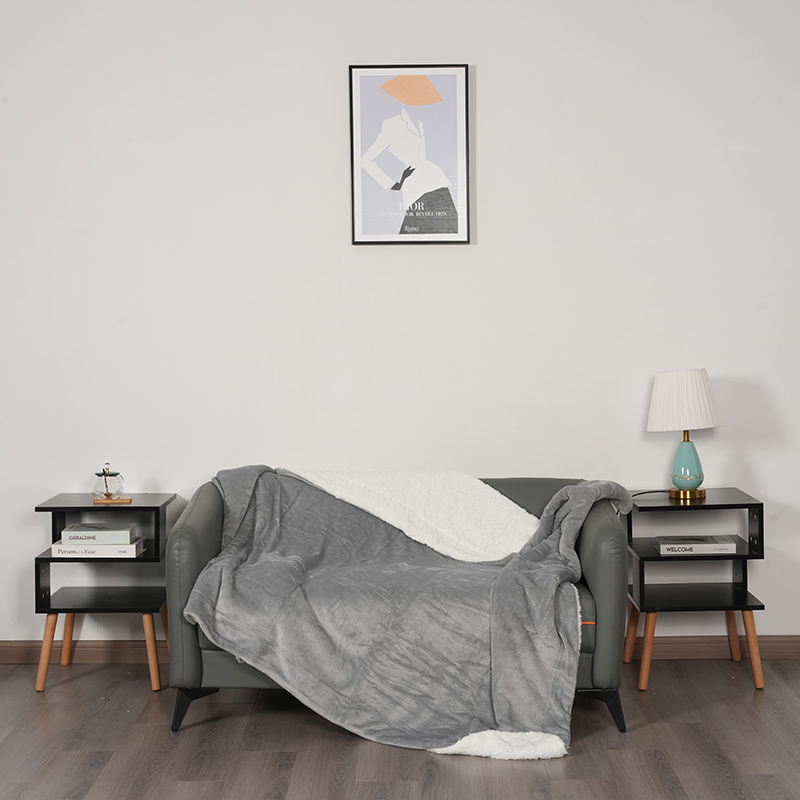
Most sherpa blankets on the market are not made from sherpa alone. The usual construction is a two-sided blanket: a printed or solid flannel face on one side, a sherpa reverse on the other. The flannel side gives you a printable surface and a smoother hand; the sherpa side does the insulating work.
Sherpa, Fleece, Flannel: Sorting Out the Names
Retail labels and mill terminology rarely line up perfectly. In the trade, sherpa means a brushed pile with a visibly curly surface, while fleece covers a much broader family of napped polyester fabrics. Shoppers often use the two words interchangeably, so it pays to describe the construction rather than lean on the name.
| Term | Surface | Typical fiber | Feel | Common use |
|---|---|---|---|---|
| Sherpa | Curly brushed pile | Polyester | Dense, fuzzy, sheepskin-like | Throw reverses, linings, blankets |
| Polar fleece | Smooth napped pile | Polyester | Light, smooth, softly fluffy | Blankets, outerwear |
| Coral fleece | Fine dense pile | Polyester | Soft, velvety, low fuzz | Bedding, robes |
| Flannel | Brushed flat weave | Polyester or cotton | Matte, smooth, gently warm | Sheet sets, blanket faces |
| Microfiber plush | Short even pile | Polyester | Silky, lightweight | Budget throws |
None of these is inherently better than the others. They solve different problems: flannel for a smooth printable face, coral fleece for bedding where softness matters more than loft, and sherpa where the customer wants that fuzzy, sheepskin look and the extra air pocket that comes with it.
What Goes Into a Sherpa Blanket
Four decisions shape how a sherpa blanket feels and performs, and each one shows up in the price:
- Face fiber: polyester is standard, and recycled polyester is increasingly requested by retail programs with sustainability targets.
- Pile height: usually somewhere between 3 mm and 8 mm. Taller pile looks richer and traps more air, but it sheds more and takes longer to dry.
- Backing: a plain knit jersey base keeps the blanket light, while a bonded flannel face adds weight, print potential and a two-tone look.
- Bonding method: adhesive lamination is faster and cheaper, sewn double-layer construction is more durable and avoids any risk of delamination after repeated washing.
Edge finishing is where a great deal of the perceived quality lives. A bound edge wraps a folded strip of fabric around the perimeter, which gives a crisp border and hides the cut pile. A folded edge turns the face fabric over and stitches it down, which is lighter and shows more of the print. A double-layer blanket, by contrast, is sewn face to face and turned inside out, so both sides are finished at once. Each method has a different cost, weight and lifespan, and the choice often comes down to how the blanket will be used and washed.
 Polar Fleece Bound Edge BlanketA bound edge blanket suitable for decorative or practical use; weight is a key factor when comparing blanket options.View Product →
Weight, Size and the Numbers Buyers Ask For
Weight is the single most useful number when you are comparing sherpa blanket offers, because it correlates with pile density and how the blanket will drape in a showroom or on a screen.
| Weight range | Typical position | What to expect |
|---|---|---|
| 200 to 250 gsm | Light throw | Drapes softly, less loft, good for year-round use |
| 260 to 320 gsm | Standard retail throw | The most common specification, balanced hand and warmth |
| 330 to 400 gsm | Premium winter throw | Dense pile, heavier hand, stronger perceived value |
| Over 400 gsm | Heavy bedding layer | Very warm, slower to dry, needs generous washing instructions |
Standard cut sizes are worth keeping on file when you compare quotes, because a "queen" throw from one supplier is not always the same as another:
- Crib: roughly 30 x 40 inches
- Throw: 50 x 60 inches, the most common retail size
- Twin: 60 x 80 inches
- Full or queen: 90 x 90 inches
- King: 108 x 90 inches
How a Sherpa Blanket Is Made
Understanding the production sequence makes it much easier to spot where a sample might be cutting corners.
- Pile knitting: yarn is knitted into a looped pile fabric on a circular or warp knitting machine.
- Brushing and shearing: the loops are raised and then cut to an even height, which creates the curly sherpa surface.
- Dyeing or printing: the fabric is dyed in the piece or printed with a design before finishing.
- Backing and bonding: a flannel face or knit base is laminated or sewn to the pile side.
- Cutting: panels are cut to size, allowing for shrinkage and seam allowance.
- Edging: bound, folded or double-layer construction is applied around the perimeter.
- Inspection and packing: the finished blanket is checked for pile loss, shade variation and stitch quality, then folded and bagged.
Edges are the step most often simplified under cost pressure, and it is worth reading up on the practical trade-offs between a folded edge and a standard hem before you lock a specification.
 Flannel Double-Layer Blanket with Enhanced InsulationA double-layer flannel blanket that provides efficient insulation while staying lightweight. The care instructions for polyester pile blankets apply here.View Product →
Caring for a Sherpa Blanket
Sherpa is easy to live with as long as it is not exposed to heat and friction. These instructions cover most polyester pile blankets and are worth printing on the care label:
- Machine wash cold or lukewarm on a gentle cycle, ideally alone or with similar fabrics.
- Skip fabric softener and dryer sheets, which coat the pile and flatten the curl.
- Tumble dry on low, or air dry flat. High heat is what causes pilling and matting.
- Do not bleach, and do not iron.
- Shake the blanket out after drying to lift the pile back up.
Educated customers return fewer blankets and leave better reviews, which in turn protects the margin on the whole program.
Sourcing Sherpa Blankets in Bulk: What to Check
Fabric weight and pile height
Ask for the weight in grams per square meter and the pile height in millimeters, then confirm both on the pre-production sample. A blanket that looks full in a photo can still arrive thin if the pile is short and the backing is light.
Backing and bonding
For laminated styles, ask how the bond behaves after five home washes. Delamination is the most common complaint on bonded sherpa throws, and it is almost always a bonding issue rather than a fiber issue.
Colorfastness, pilling and shedding
Request test results for colorfastness to rubbing and washing, plus a pilling assessment. Pile loss in the first wash is normal to a small degree, but heavy shedding signals a finishing problem.
Edges, labels and packaging
Confirm the edge method in writing, along with care labels, hang tags, polybag dimensions and carton counts. These details decide whether the goods move straight to the shelf or need rework at the warehouse.
If you are building a sherpa-backed program from the fabric up, the face fabric deserves the same attention as the pile. A well-brushed flannel gives you a printable surface that holds color and stays smooth after washing.
 Solid Flannel Fabric for Cold Weather ComfortA solid flannel fabric suitable as a face fabric for sherpa-backed blankets, offering warmth, breathability, and durability after washing.View Product →
Blanket programs rarely fail because of one dramatic mistake. They fail because of small gaps, a pile height that was never written down, a bond that was not wash-tested, an edge that was changed without anyone noticing until the cartons arrived.
We are a pile fabric and finished blanket manufacturer based in Shaoxing's China Textile City, and we produce flannel, coral fleece, polar fleece and sherpa-style pile fabrics alongside finished blankets, bedding and loungewear. That means we can quote a complete blanket or supply the fabric for your own cut-and-sew operation. If you are comparing sherpa constructions, send over a target weight, size and edge style, and we will tell you honestly what is realistic at your price point.