

 English
  Español
  عربى
عربى We are a national high-tech enterprise. At present, there are many kinds of self-woven and cooperatively processed fabrics, including microfiber warp-knitted towel cloth, weft-knitted towel cloth, coral fleece, etc.
Content
A sherpa throw that still looks good after fifty washes usually did not get there because the pile was especially soft or the price was high. It got there because the backing, the seam, and the edge treatment held up. When shoppers talk about an inexpensive sherpa throw, they focus on how the fabric feels. The real difference in performance sits in the details that are easy to ignore: the edge, the finished weight, and the way the fleece is constructed.
The Fabric Construction of a Sherpa Throw
A sherpa throw is not a wool product. It is typically a polyester knit with a short, curled pile on the face that mimics lamb's wool, and a smooth or lightly napped back. The construction has to do two things at once: keep the surface soft enough to touch, and protect the structure underneath so the blanket does not warp in the wash.
Pile height and pile density carry the feel. Long pile traps more air but pills faster and collects lint. Short pile looks denser but needs careful brushing to stay soft. For a blanket that stays close to the body, a medium pile with a finished weight near 200 GSM is a reasonable first reference.
If you want more warmth without making the blanket heavier in shipping, double-layer construction is the pragmatic choice. Two fleece faces are joined together, so both sides provide insulation and the blanket does not need a thick backing to feel substantial. If you are buying through an online seller or wholesaler, ask for the exact GSM and check whether the stated weight includes the binding and the sewing threads. Those small differences change how the finished throw responds to repeat washing.
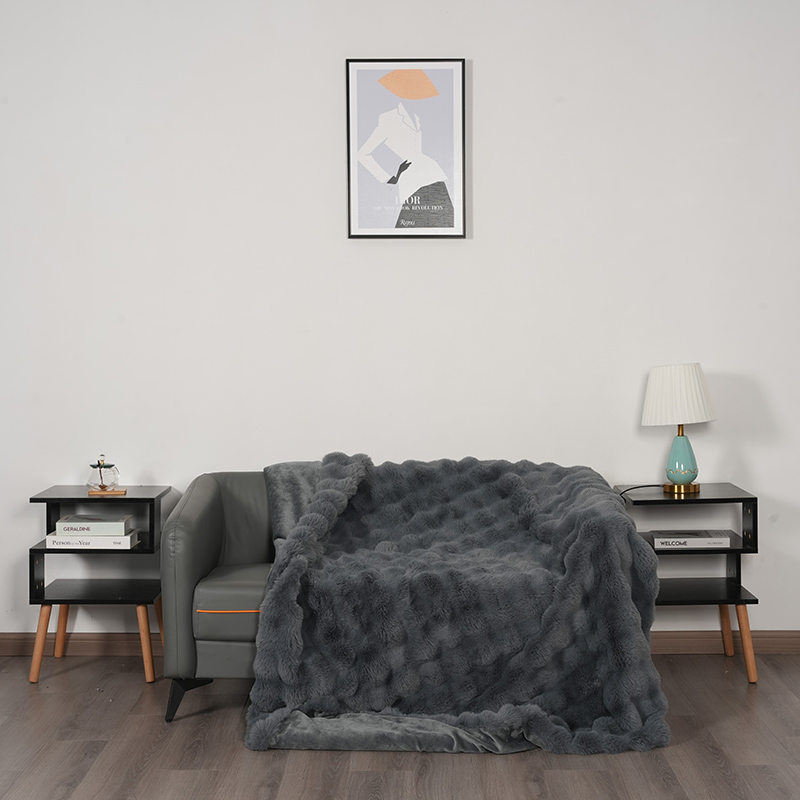 Flannel Double-Layer Blanket for Insulation and WeightThis double-layer fleece blanket adds warmth without excess shipping weight. When buying, verify the exact GSM and whether the stated weight includes binding and threads, as these factors affect washing durability and overall value.View Product →
| Fabric option | Surface feel | Typical weight | Best use |
|---|---|---|---|
| Sherpa-style polyester | Short, curled loops on the face, smooth knit back | 180–260 GSM | Everyday throws, sofa layers, travel blankets |
| Ultra-soft fleece | Dense plush with low pile | 150–240 GSM | Wraps, light blankets, kids' bedding |
| Flannel fleece | Brushed face with a matte finish | 130–200 GSM | Lighter throws and bed linen layers |
| Double-layer fleece | Two brushed faces joined together | 240–320 GSM | High-warmth throws and cold-climate use |
If a supplier quotes "standard fleece" without a GSM number, consider it an incomplete quote. Surface feel can be adjusted with brushing, but weight and fiber thickness are set during knitting.
Edge Work and Seam Quality
The edge may decide the life of a sherpa throw.
- A raw cut edge looks modern and costs less, but the face yarn can pull out after washing.
- A folded edge turns the fabric inward before stitching. It gives a clean, flat perimeter and works well for lightweight throws.
- A bound edge wraps the raw edge with a separate strip of fabric. It is the strongest finish when the throw is used on a sofa or bed and receives constant friction.
Each finish changes the piece weight and the production time. A bound edge adds material and an extra sewing operation, but it also solves a real complaint: unraveling.
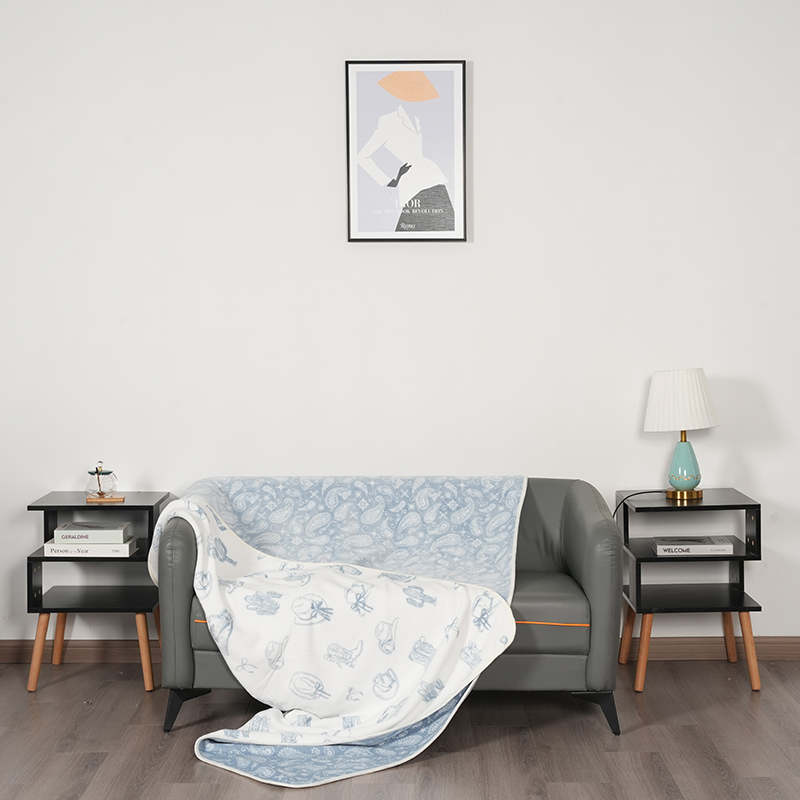
The trade-off between a folded edge and a regular blanket finish is covered in more detail in our comparison of folded-edge blankets and regular stitched throws. The short version is that a folded edge protects the seam from direct contact, while a regular stitched edge leaves the yarn ends exposed.
 Flannel Folded Edge Blanket with Protective SeamThe folded edge shields the seam from direct wear, making this flannel throw a practical choice for everyday warmth and comfort. Check that the stitching catches the full edge to ensure durable tension across the boundary.View Product →
The seam quality matters more than the brand of the fabric. Look for a stitch that catches the full edge, not just the pile. When you pull two corners of a finished throw, you should feel tension across the entire boundary, not a loose fabric edge that separates from the binding. If you choose a bound edge, inspect the corners. A binding that was cut loosely will ripple around the corner, which is a sign of production variability rather than fabric quality.
 Flannel Bound Edge Blanket with Finished CornersThis bound edge blanket combines a neat finish with flannel's softness, but inspect the stitching and corners for ripples that signal production variability. Compare total finished weight, not just GSM, when evaluating quotes.View Product →
Weight, Density, and Batch Consistency
Weight is the most objective indicator of what you are buying. GSM tells you the fabric density, but the finished blanket weight includes the hem, the binding, and the sewing threads. Marketers can list any GSM without telling you the total grams per blanket. When you compare quotes, compare the whole product.
Commercial tolerance for fleece blankets is often around five to ten percent. That sounds acceptable until you realize what it means on an order of ten thousand pieces. A 220 GSM throw that shades down to 198 GSM loses its dense feel, even though the price did not change. If you buy for resale, set a weight range and ask for pieces from the actual production batch, not just the prepared sample. You can weigh ten blankets from different cartons and write down the results. The range between the lightest and the heaviest piece tells you more than any brochure.
Wash Testing and Colour Consistency
A single pre-production sample cannot show how a whole batch will behave. Dye lots, brushing intensity, and water temperature in the factory all cause small differences. Machine wash testing matters because sherpa-style throws are not decorative pieces; they go into the washer and the dryer on a regular schedule. Ask the factory for a washing test report and, if possible, for several loose samples from the production line. Those samples are the only realistic way to check pilling, shade change, and edge condition.
If the factory runs both fabric and finished products, you also gain the option to adjust the fleece material before the blanket is cut. This sounds like a small advantage, but it shortens the development loop because the fabric is not supplied by a separate source. Keep the baseline simple: define the material, the GSM, the edge type, and the seam style before you talk price.
The Bottom Line
A sherpa throw is easy to underestimate. Soft pile catches the hand, but the conditions for a durable product are documented: material, finished weight, edge construction, seam quality, and batch consistency. Use them to compare any quote from any source. And when the product will carry your name, keep samples from every production run, not just the first one. The few grams and the tiny edge details are exactly where a good sherpa throw earns back its price.