

 English
 Español
 عربى
We are a national high-tech enterprise. At present, there are many kinds of self-woven and cooperatively processed fabrics, including microfiber warp-knitted towel cloth, weft-knitted towel cloth, coral fleece, etc.
Content
- 1 What Actually Counts as an Embroidered Blanket
- 2 Choosing the Base: Why Pile Height Changes Everything
- 3 How Edge Construction Changes Where the Needle Can Go
- 4 Stitch Types at a Glance
- 5 Where the Cost of an Embroidered Blanket Really Goes
- 6 From Artwork to Shipment: How a Decorated Order Runs
- 7 What We Inspect, and What Buyers Usually Forget
- 8 Where Embroidered Blankets Sell Best
- 9 Frequently Asked Questions
An embroidered blanket is almost always a plain blanket first. A roll of flannel, coral fleece or sherpa comes off the line as a simple rectangle of soft cloth, and then someone adds a monogram, a name, a small corner motif, a logo, or a chain-stitched border. That one added detail is often what separates a commodity textile from a gift-shop item, a branded promotional piece, or a nursery keepsake that gets kept instead of donated.
We are Shaoxing DingYi Textile, a finished-goods and fabric factory based in China Textile City, Shaoxing, Zhejiang. We run flannel, coral fleece, sherpa and similar pile fabrics through our lines all year round and turn them into blankets, bedding sets, duvets and loungewear. So when buyers ask us about embroidered blankets, the conversation nearly always starts in the same place: what is the base cloth, how is the blanket built, and where can a needle safely go without ruining either the hand feel or the edge?
This guide answers those questions from a manufacturing point of view. It should be just as useful if you are hand-stitching a single baby blanket at your kitchen table as it is if you are costing a 5,000-piece program for a retail chain.
What Actually Counts as an Embroidered Blanket
"Embroidered" is a broad label. Underneath it sit three quite different production routes, each with its own cost curve, minimum order and visual signature. Knowing which one you are actually asking for saves a lot of back-and-forth later.
Hand embroidery
Chain stitch, blanket stitch, satin stitch and cross stitch worked by hand. Slow, irregular in the charming way, and expensive per unit. It belongs on heirloom pieces, personalised baby blankets and small-batch gift lines where the imperfection is part of the value.
Machine embroidery
Computerised multi-head machines running a digitised file. Consistent registration, repeatable across thousands of pieces, and the only realistic route for logos, monograms and repeating borders at retail volume. Design size and stitch count drive the price far more than the machine does.
Chenille and chain-stitch machine work
A thicker yarn is looped or chain-stitched onto the surface, leaving a raised, slightly tufted line. It reads as vintage and works especially well on heavier throws and sherpa, where a fine satin stitch would simply sink into the pile and disappear.
A fourth route is appliqué: a piece of contrasting fabric is laid on the blanket and secured with a satin or blanket-stitch outline. It gives you the visual weight of a large motif without the stitch count, which is why mascots, cartoon characters and big lettering are usually built this way.
Choosing the Base: Why Pile Height Changes Everything
The single most common mistake we see in embroidery briefs is a design approved on paper and then applied to the wrong cloth. A stitch plan that looks crisp on woven flannel can look blurred and half-buried on high-pile sherpa, and the same file can pull and pucker on a lightweight knit.
Flannel and other brushed wovens
Woven, brushed on one or both faces, with a short and fairly dense surface. It holds fine detail, small lettering and tight curves well, and it distorts very little under a dense stitch block. This is the base most monogram and logo work is specified on.
Coral fleece, sherpa and rabbit fur
Knitted, with a raised pile that swallows thin thread. Fine 2 mm lettering will vanish. Push the design bigger and bolder, use a thicker thread, and add a cut-away backing plus a water-soluble topping so the loops sit on top of the pile instead of sinking into it.
If a buyer wants pattern rather than stitch, printed flannel is often the more economical answer, and it can be combined with a small embroidered logo in one corner to keep the branding readable.
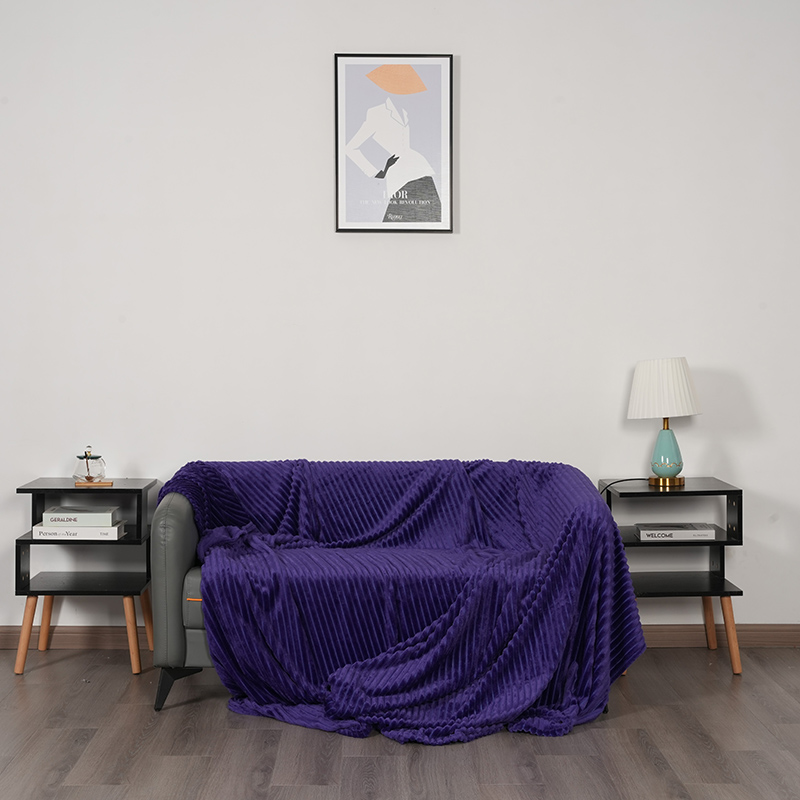
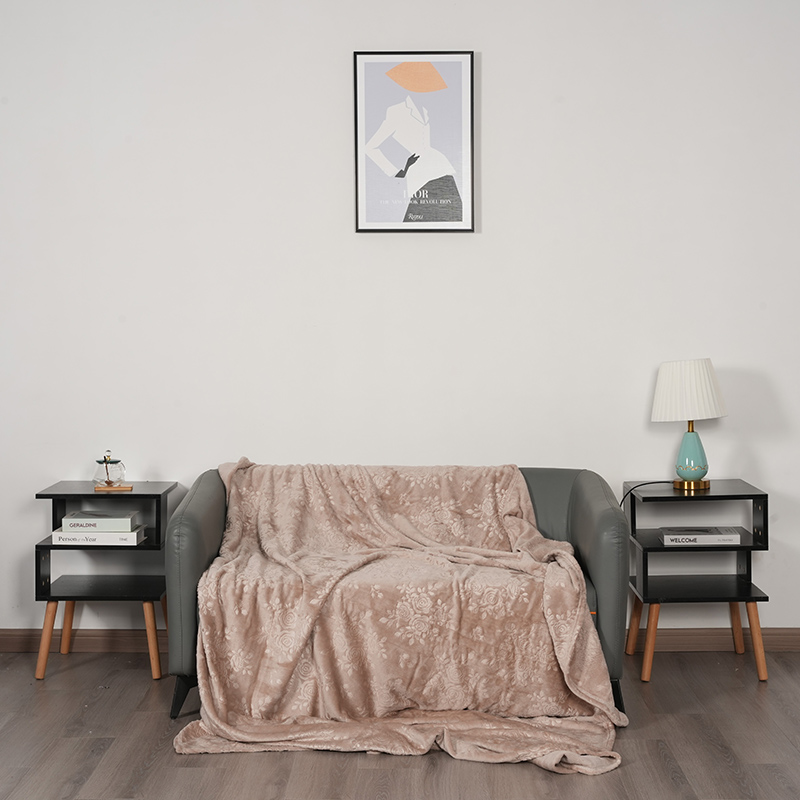 Solid Flannel Fabric for Warm, Breathable ComfortA dense, warm flannel with breathable comfort and wrinkle resistance, worth reviewing as a solid-color fabric base for embroidery-focused projects.View Product →
How Edge Construction Changes Where the Needle Can Go
Edges are where most embroidery problems show up, because the finishing method decides how much flat, stable cloth you have to work with near the perimeter.
Bound edge
A separate binding strip is folded over the raw edge and stitched all the way round. It is the most common finish on throw blankets because it is durable, gives the blanket a defined frame, and hides the raw edge completely. For embroidery this is convenient: a corner motif or a border can sit close to the perimeter without fighting a hem allowance.
Folded edge
The blanket's own cloth is folded twice and stitched. Lighter, softer and less bulky, but the fold eats roughly 2 to 3 cm of usable surface. Keep any embroidery clear of that zone or the design will pucker when the hem is pressed. The difference between the two finishes is worth understanding before you commit a design to either one.
Double layer
Two layers joined into one reversible blanket. If the reverse face will be seen, either back the embroidery so the underside is clean, or place a second design on the reverse so the stitching is hidden between the layers.
Backing and topping
Cut-away backing stabilises the stitch on knits; tear-away is lighter but less durable. On pile fabrics a water-soluble topping keeps loops from being buried. Ask which one is being used, because it affects both hand feel and washability.
If you are still weighing up finishes, our note on the folded edge versus a regular edge walks through the cost and durability trade-offs in more detail.
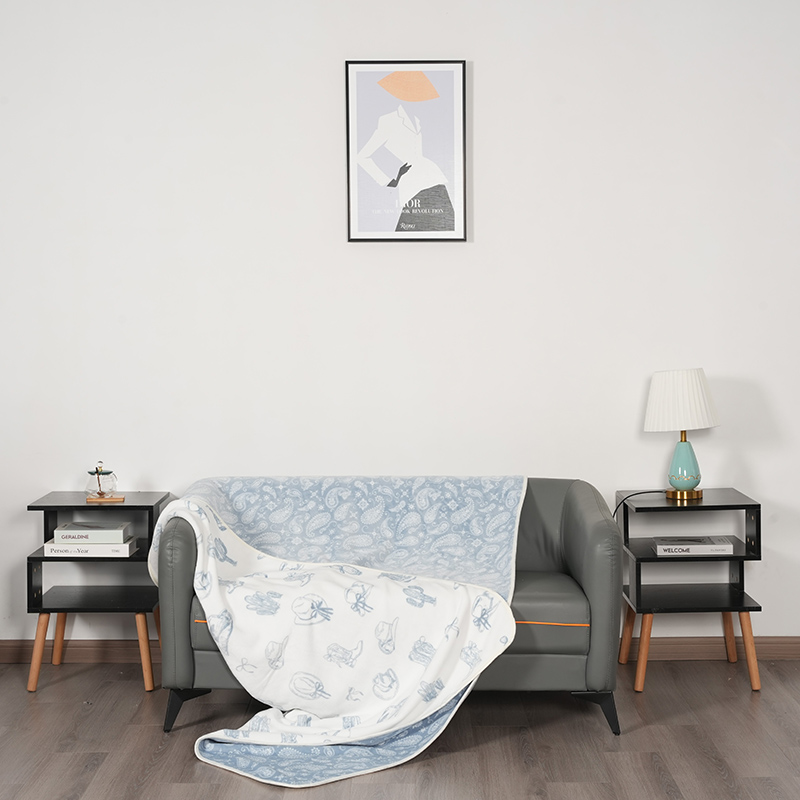 Flannel Bound Edge Blanket for Soft Warm RestA soft flannel blanket with bound-edge construction, positioned for warm autumn and winter sleep and short daytime rest, worth considering when comparing edge finishes.View Product →
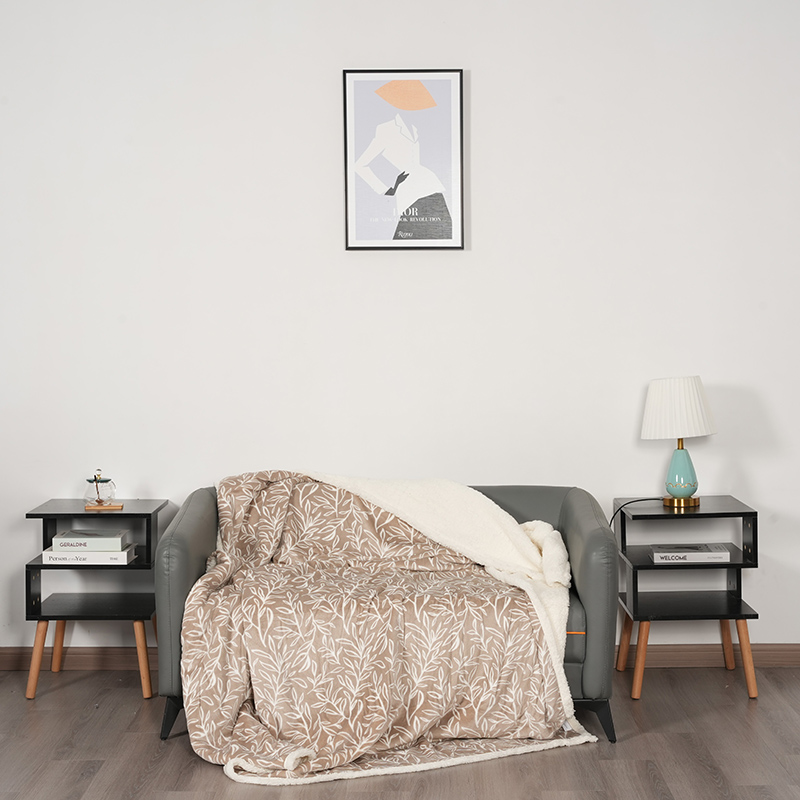 Flannel Double-Layer Blanket for Efficient Cold-Weather WarmthA double-layered fleece blanket that traps still air for efficient insulation, worth comparing for lightweight warmth against single-layer flannel of the same thickness.View Product →
Stitch Types at a Glance
Use the table below as a quick reference when a designer, a decorator or a buyer asks which stitch suits which blanket.
| Stitch | Visual effect | Works best on | Typical use |
|---|---|---|---|
| Chain stitch | Rope-like line, slightly raised | Flannel, coral fleece | Borders, lettering, outlines |
| Satin stitch | Dense, glossy, flat block | Flannel, woven cotton | Monograms, small motifs |
| Blanket stitch | Looped edge accent | Folded-edge blankets | Decorative edge finish |
| Cross stitch | Grid of small crossed shapes | Even-weave flannel | Traditional and nursery designs |
| Chenille loop | Thick, tufted, vintage | Sherpa, heavy throws | Large lettering, retro throws |
| Appliqué with satin outline | Fabric shape with stitched border | Any stable base | Big motifs, logos, mascots |
Where the Cost of an Embroidered Blanket Really Goes
Buyers new to decoration often assume embroidery is a flat add-on. It is not. The chart below shows roughly how the cost of a decorated fleece or flannel blanket breaks down on a typical mid-size order.
The practical takeaway: shrink the design before you downgrade the fabric. A smaller, cleaner motif on a good 220 gsm flannel usually reads better and lasts longer than a large, sparse design on thin cloth.
From Artwork to Shipment: How a Decorated Order Runs
Every program is a little different, but the sequence below is the one we follow for finished blanket orders that include a decoration step.
1. Artwork and digitising
Vector or high-resolution artwork is converted into a stitch file. One to three days, and this is where thread colours are matched to the base cloth.
2. Strike-off and sample blanket
A sample is run on the actual base fabric, not on a substitute. Five to ten days. Approve this, and the rest of the run follows it.
3. Fabric production and cutting
Base cloth is knitted or woven, brushed, dyed and cut to size. This is the longest stage and the one that sets the critical path.
4. Decoration
Embroidery or appliqué is applied to the cut panels, usually before the blanket is closed so the backing stays hidden.
5. Edge finishing and inspection
Binding, folding or layer joining, followed by a full-piece inspection rather than an AQL spot check on decoration only.
6. Pressing, packing and shipping
Rolled or flat-packed depending on retail format, with poly bags, hang tags or gift boxes added as specified.
What We Inspect, and What Buyers Usually Forget
On our side of the table
- Registration and alignment against the approved sample
- Thread tension, and whether the backing is visible from the front
- Puckering or needle holes around dense stitch blocks
- Residue left by tear-away backing
- Colour consistency of thread across the whole run
- Evenness of the edge stitch where it meets the embroidery
The questions that come up later
- How does the design look after three home washes?
- Is the placement still centred once the folded hem is pressed?
- Does the reverse face look clean when the blanket is turned over?
- Does the bulk thread colour match the approved lab dip?
- Is the embroidery stiff enough to affect how the blanket drapes?
Ask about wash testing before you place the order, not after. A fifteen-minute shrinkage check on a sample saves a container of returns.
Where Embroidered Blankets Sell Best
Decoration changes who the buyer is. The same 200 gsm flannel throw becomes a different product depending on what is stitched onto it.
Baby and nursery gifts
Names, birth dates and small animal motifs. Low stitch counts, high perceived value, strong gift-box potential.
Corporate and promotional
Single-colour logos in a corner, usually on bound-edge throws. Volume matters more than detail here.
Hospitality and retail throw programs
Brand marks or property names, often with a matching cushion program in the same base cloth.
Pet and travel blankets
Simple name bands and durable edges, since these pieces get washed far more often than a bed throw.
Matching accessories
The same flannel or coral fleece used for a blanket works beautifully on an embroidered throw pillow, which lets a retailer sell a coordinated set from one fabric story.
Frequently Asked Questions
Can any blanket be embroidered?
Almost any stable fabric can be stitched, but the result varies enormously. Woven flannel holds fine detail well; high-pile fleece and sherpa need bigger, bolder designs plus proper backing and topping. Very stretchy or very loose knits are the hardest to decorate cleanly.
Will embroidery make a fleece blanket stiff?
Only where the stitching sits. A small corner motif or a monogram has almost no effect on drape, while a large dense fill covering a third of the surface will feel noticeably firmer. If softness matters, keep the stitch count down and the design open rather than solid.
How much does decoration add to the unit cost?
It depends on stitch count, design size, thread colours and order quantity, but the stitch file itself is usually the largest single factor. A small single-colour logo and a large six-colour motif can differ by several times in decoration cost on the same blanket.
What is a realistic minimum order quantity?
Because base fabric is produced in batches, most factories prefer to run the fabric once and decorate within that run. Sampling is possible at very small quantities; full production is usually quoted in the hundreds or thousands per colourway, depending on the cloth.
How should an embroidered blanket be washed?
Cold or lukewarm machine wash on a gentle cycle, mild detergent, no bleach and no fabric softener, then tumble dry low or line dry. Turn the blanket inside out if the backing is exposed, and avoid ironing directly over the stitching.
Can thread colours be matched to a specific reference?
Yes. Send a Pantone reference or a physical swatch and we will match against the thread chart, then confirm on a strike-off sample so you can see the colour against the actual blanket cloth rather than on a screen.
Whether you are sourcing a decorated program or simply working out which base cloth will carry your design, the answer usually comes down to three things: the pile, the edge, and the stitch plan. Get those right and the rest of the order tends to look after itself.