

 English
  Español
  عربى
عربى We are a national high-tech enterprise. At present, there are many kinds of self-woven and cooperatively processed fabrics, including microfiber warp-knitted towel cloth, weft-knitted towel cloth, coral fleece, etc.
Content
Imagine this: you run a home goods brand and your Q4 plan depends on a container of fleece sheets arriving by October. The fabric feels soft in a sample pouch, but the first wash test reveals pilling and a pile height 30 percent lower than the specification you signed. This is the kind of situation that separates buyers who check fabric parameters from buyers who rely on hand feel alone.
So let's start with the conclusion: the most important difference between fleece sheet suppliers is how they control fabric weight (GSM), pile height, and heat-setting. These three parameters determine not just warmth, but also whether the product passes a retail QC inspection or fails six months into a contract.
What "fleece sheets" actually means in manufacturing
When a bed sheet is labeled as a fleece sheet, it means the fabric has been brushed or raised on one or both sides to create a dense pile surface. This is different from woven cotton or polyester microfiber. The pile traps air against the skin, which is what creates the warmth.
In the supply chain, the base construction is typically a knitted fabric. The fiber most often used is polyester, although lower-cost products may mix in recycled polyester or a small ratio of cotton. The brushing process happens after knitting, and then a heat-setting step stabilizes the fiber so it does not shrink when washed.
For international buyers, it is important to check whether the supplier runs one continuous production line from fabric knitting to finished sheet sewing. A factory that buys fabric on the outside market has less control over weight uniformity, color matching, and shrinkage. A vertically integrated producer can trace every batch back to its own fabric mill, which gives it a clear edge when a purchase order requires a tight GSM tolerance across ten thousand units.
Flannel fleece vs coral fleece
There are two major fleece sheet types you will encounter in the Chinese textile market. They are not the same product, even though both appear as soft, fuzzy sheets.
Flannel fleece sheets are usually made from 100% polyester with a single-sided or double-sided brushing. The weight range is commonly 250-350 GSM for mid-range products. This material has a shorter, denser pile that feels more like a traditional flannel blanket. It resists pilling better when the fiber is heat-set correctly. Many supermarket programs choose flannel fleece because it passes repeated household washing without losing its silhouette.
Coral fleece sheets use a slightly different knitting structure. The pile is longer and has a distinctive granular surface, similar to the structure of brain coral. Coral fleece is usually in the 180-280 GSM range, with a lighter hand feel. It is popular for autumn and early winter products, because it feels soft immediately and does not feel heavy against the skin. However, the longer pile can trap more loose fiber during manufacturing, so quality control must be stricter to avoid shedding.
| Product Type | Typical GSM | Pile Height | Hand Feel | Key Risk |
|---|---|---|---|---|
| Flannel Fleece Sheet | 250 - 350 | short, dense | soft, cotton-like | shrinkage if not heat-set |
| Coral Fleece Sheet | 180 - 280 | longer, granular | light, plush | fiber shedding during initial washes |
From a cost perspective, coral fleece often uses less fiber because the lighter GSM means lower raw material consumption. Flannel fleece requires more polyester per square meter, so it costs more. But flannel fleece gains an advantage in durability tests, making it a safer choice for repeat orders where the retail price position is in the mid to upper range.
 Flannel Bed Sheet for Warmth and SoftnessThis flannel bed sheet provides instant warmth and a soft feel, making it a cozy choice for cold nights. Its breathable fabric balances insulation and comfort, suitable for direct skin contact.View Product →
Fitted sheets, flat sheets, and duvet covers
A fleece sheet program rarely consists of a single item. Supermarket buyers usually specify a complete set: one elastic fitted sheet, one flat sheet, and one soft duvet cover. For an e-commerce operator, the same products may be sold separately.
Fitted sheets require a different production discipline. The elastic band must be sewn with a strong tension that can hold around a 15 cm or 25 cm deep mattress without slipping. The corner seams need to anchor the elastic through multiple cycles of washing. If the supplier skips a standard elastic test, the product will return at a high rate.
Flat sheets are simpler in construction, but the hemming width and stitch density still matter. A loose overlock seam will unravel after the first few washes. Many Amazon sellers request a 1 cm hem with a topstitch to prevent fraying. This is one of the details we cover in our article on choosing flannel bedding sets.
Duvet covers add another layer of complexity, because they need a zipper or button closure and a smooth inner face so the duvet does not snag. In a fleece duvet cover, the inner side is often brushed to a lower profile while the outer side keeps the loft.
 Coral Fleece Fitted Sheet with Elastic EdgesThis coral fleece fitted sheet offers immediate warmth and a plush touch. Elastic edges keep it secure on the mattress, and its moisture-wicking properties add comfort without the need for electricity.View Product →
Sizes, tolerances, and what a retail buyer should verify
International sheet programs are built around standard mattress sizes. In the North American market, the common sizes are Twin, Twin XL, Full, Queen, King, and California King. In Europe, the standards are closer to 200 x 200 cm with different pillow dimensions.
Regardless of the market, the purchase contract should state not only the finished sheet dimensions but also the allowable tolerance. A difference of 2 cm in length may be invisible to the end consumer, but a difference of 5 cm is visible and can cause returns.
For a bedding set program, the most important specification is the tolerance on the fitted sheet. If the elastic sheet is 4 cm too short on the depth, it will not grip the mattress. If it is 5 cm too wide, it will look loose in the morning.
| Region | Common Size | Fitted Sheet Depth | Tolerance |
|---|---|---|---|
| North America | Twin / Full / Queen / King | 30 cm to 40 cm | +/- 2 cm |
| Europe | single / double / king | 25 cm to 35 cm | +/- 2 cm |
| Asia / CN | single / queen / king | 20 cm to 30 cm | +/- 2 cm |
Sizing is not the only thing to verify. Buyers should also ask for the recommended washing temperature. Fleece sheets should be washed at 30-40 degrees Celsius, and the heat-setting quality determines whether the pile collapses at a higher temperature. A supplier that does not run a heat-setting step will produce a sheet that changes texture after the first wash.
Quality checks to run before placing a bulk order
When you visit a factory, your goal is not to admire the showroom. Your goal is to check the process. The following five checks are reasonable for any bulk fleece sheet order.
First, inspect the fabric weight. Ask for the same fabric roll that is currently running on the production line, and weigh a meter with a fabric cutter. The GSM tolerance should be between plus or minus 5 percent. If the supplier cannot show you a cutting and weighing procedure, proceed with caution.
Second, run a lab wash test. The ISO has reference methods for laundering colorfastness and dimensional change. You do not need to set up a whole lab. A domestic washing machine in the factory can handle a 3-cycle test at 40 degrees Celsius. Measure the sheet before and after. A good flannel fleece sheet should shrink less than 5 percent.
Third, check the pile height after drying. Some fabrics feel dense when wet but flatten once dried. Brush or rub the fabric by hand with consistent pressure and see if any fibers pull out. This is a simple field test that predicts shedding in the first few washes.
Fourth, check the seam strength. Pull the corner seams of the fitted sheet. The elastic should not pop out easily. If the elastic is sewn into a casing with a 0.5 cm allowance and the thread count is low, the product will fail within a season.
Fifth, ask for a reference sample of the same production batch. Keep it sealed with a numbered label. This sample is your legal baseline in case a dispute arises later.
A brief sourcing checklist
You can minimize the risk of a failed fleece sheet season by placing seven questions on the table before you sign the contract:
- What is the exact GSM of the fabric, and how much is the incoming tolerance?
- Which brushing process is used: one-side, two-side, or a combined burnished finish?
- Is heat-setting done on the fabric before sewing?
- What is the expected shrinkage after three washes at 40 degrees Celsius?
- What elastic width and tension are used for the fitted sheet?
- What is the minimum order quantity, and can a smaller pilot order be arranged?
- What is the production lead time from fabric knitting to packed cartons?
The answers to these questions will tell you much more than a texture sample ever will.
Fleece sheets are not a commodity product that can be sourced by price alone. The difference between a smooth, durable sheet and a pilling, shrinking batch often comes down to process control in the factory. In a market where retail buyers are pushing for shorter lead times and tighter specs, the supplier that owns its fabric mill, runs its own heat-setting, and has a three-step inspection has a real advantage.
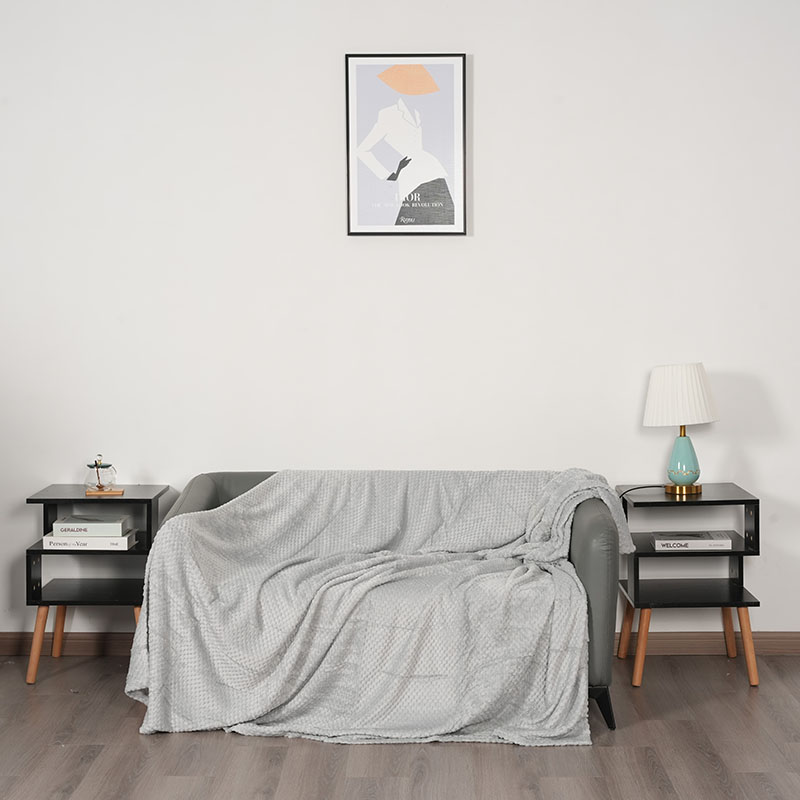 Flannel Duvet Cover for Enhanced Sleep ComfortThis flannel duvet cover delivers instant warmth and softness, with a brushed surface that traps air for insulation. Durable and machine washable, it complements a warm sleep system.View Product →