

 English
 Español
 عربى
We are a national high-tech enterprise. At present, there are many kinds of self-woven and cooperatively processed fabrics, including microfiber warp-knitted towel cloth, weft-knitted towel cloth, coral fleece, etc.
Content
- 1 Why Custom Embroidered Stadium Blankets Work So Well
- 2 Choosing the Right Fabric for Embroidery
- 3 Embroidery, Patches, or Print?
- 4 Logo Placement and Sizing
- 5 Edge Finishing and Why It Matters
- 6 Sizes, Quantities, and Bulk Ordering
- 7 Packing, Care, and Retail Readiness
- 8 Working With the Mill That Makes the Fabric
A stadium blanket has a harder life than most throws. It gets dragged onto cold bleachers, folded into a car boot, sat on, spilled on, and washed far more often than anyone expects. When you put a logo on one, all of that pressure lands on a few square inches of thread. That is why custom embroidered stadium blankets are one of the few promotional textiles people genuinely keep, and why the construction details usually matter more than the design file.
We make fleece fabrics and finished blankets in Shaoxing, Zhejiang, and most of our conversations with retail buyers, promotional distributors and cross-border brands come back to the same short list of questions: which fabric takes embroidery best, how large should the mark be, and what will that stitch line look like after ten washes. Here is what we have learned from those conversations.
Why Custom Embroidered Stadium Blankets Work So Well
Embroidery earns its place on a blanket because it is stitched into the material rather than printed on top of it. On a brushed fleece surface, a printed logo sits on the tips of the pile, which is precisely where friction, folding and repeated washing do their damage first. Thread is anchored below that surface, so the mark keeps its shape long after the fabric around it has been softened by use.
There is a sensory argument too. People touch a blanket more than they touch a tote bag or a water bottle, and a raised embroidered mark reads as quality in the hand. For retail programmes, that translates into a product that can sit on a shelf at a higher price than a plain throw. For promotional programmes, it produces something the recipient does not quietly donate a month later.
The trade-off is that embroidery needs planning. Very fine detail, gradients and photographic artwork do not translate well into thread, especially on a high-pile surface. A good digitising file, with the right underlay and stitch density for fleece, will do more for your finished blanket than any change to the artwork itself.
Choosing the Right Fabric for Embroidery
Fleece is a family, not a single material, and the height of the pile is the variable that decides how much stitch detail survives. A short, dense surface holds small lettering well. A loftier, brushed surface wants bold shapes and generous spacing between elements.
| Fleece type | Surface character | How it handles embroidery | Where it fits |
|---|---|---|---|
| Flannel fleece | Short, dense pile with a smooth hand | Crisp small lettering and tight registration | Stadium and promotional blankets |
| Polar fleece | Loftier brushed surface | Bold marks and solid shapes read best | Cold-weather and outdoor events |
| Coral fleece | Feathery, very soft pile | Simple marks and larger patches only | Indoor throws and gift sets |
| Double-layer fleece | Flannel face with a warmer reverse | Embroider the smoother face only | Premium retail and team merchandise |
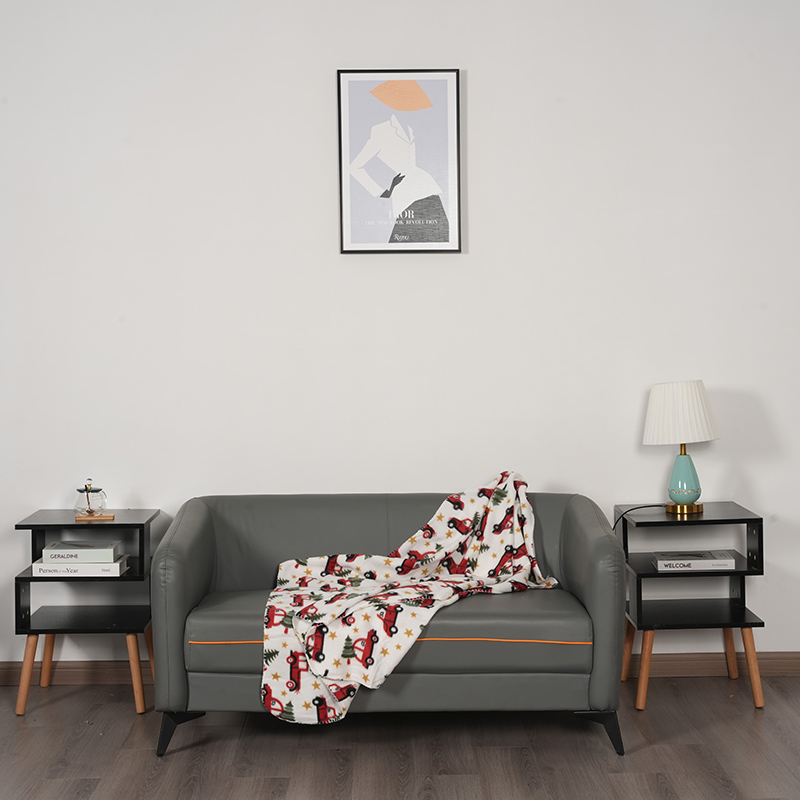
 Flannel Bound Edge Blanket for Soft Warm SleepA soft, warm bound-edge blanket for autumn and winter sleep or daytime rest, suited to comfortable home use.View Product →
In practice, flannel fleece is the workhorse for branded stadium blankets because it balances weight, cost and stitch clarity. Polar fleece suits programmes where warmth matters more than typography, and double-layer constructions are used when the blanket is meant to look like a premium retail item rather than a giveaway.
Embroidery, Patches, or Print?
Direct Embroidery
The most durable and most requested option. Cost scales with stitch count and the number of thread colours, so a one to four colour logo is usually the sweet spot. Small text works well on flannel fleece, but anything under a few millimetres tall will close up on a brushed surface.
Appliqué and Woven Patches
When a logo is multi-coloured, finely detailed, or carries a crest, a woven or embroidered patch sewn onto the blanket is often the cleaner answer. The patch is produced separately, then stitched down, which also adds a little structure and weight to the corner. It is a common choice for sports clubs and school merchandise.
Printed and Sublimated Panels
Print covers large areas cheaply and handles full-colour artwork that embroidery cannot. On fleece, however, it sits on the pile, so it wears faster. Many blankets we produce combine the two: an embroidered mark on the corner and a printed or woven label near the hem.
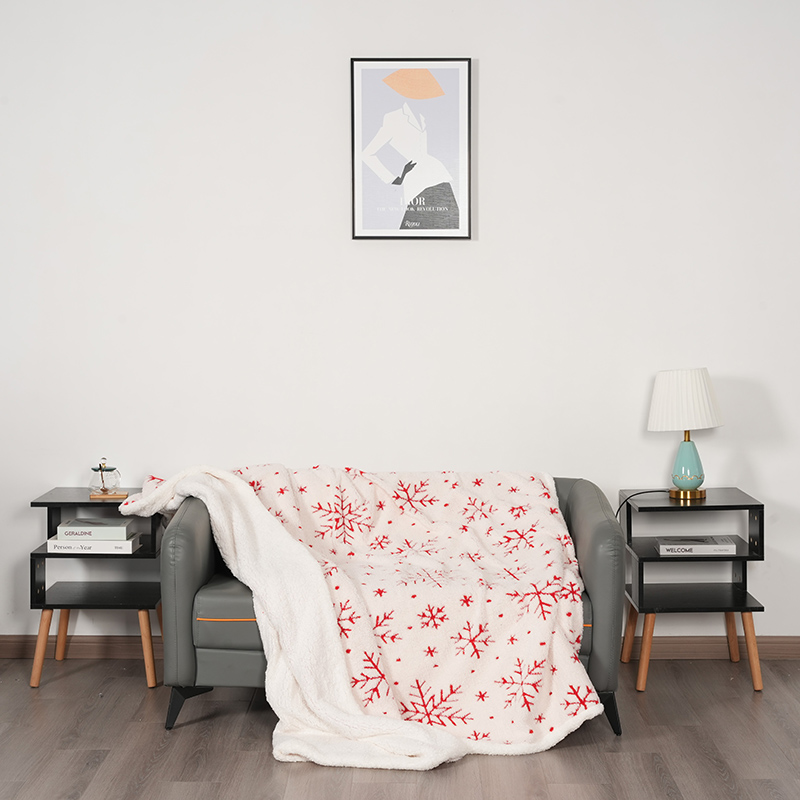
 Polar Fleece Bound Edge Blanket for Home and Outdoor UseAn inexpensive, versatile throw balancing softness, warmth, and lightness, with rich colors and patterns for varied home styles.View Product →
Logo Placement and Sizing
Placement is usually decided by one question: when the blanket is folded on someone's lap, what still shows? That single test eliminates most awkward layouts before production begins.
- Corner placement, roughly 8 to 12 cm in from each edge, is the classic stadium position and stays visible when the blanket is folded.
- A centred mark turns the blanket into a photo prop for events and social media.
- Hem bands and edge trims can carry a repeating wordmark without adding much stitch cost.
- Very small marks, under about 4 cm, lose definition quickly on brushed surfaces.
Send vector artwork and tell us the finished size and position you want. Before bulk production, ask for a stitch-out sample on the actual fleece you have chosen. A logo that looks right on a screen can behave very differently once it meets a pile.
Edge Finishing and Why It Matters
Blanket edges are where inexpensive products reveal themselves. A bound edge wraps the blanket border in a separate fabric strip and gives a firm, tailored outline that resists fraying. A folded edge turns the blanket fabric back on itself and stitches it down, which keeps the surface uninterrupted and feels lighter in the hand. Both are durable; they simply look and behave differently.
Thread choice matters as much as the technique. A matching thread makes the finish disappear, while a contrasting one turns the edge into a design feature. If you are weighing up the options, our note on folded edge versus regular blanket construction walks through the practical differences in wear and appearance.
Whichever finish you select, ask for the corner joins to be inspected. Corners take the most stress, and a weak join is the first thing to fail on a blanket that travels every weekend.
Sizes, Quantities, and Bulk Ordering
Stadium blankets are usually produced in two or three standard sizes, with a larger option for two people sharing and a compact option for children or bleacher seating. Custom dimensions are possible, but standard sizes keep tooling simple and delivery predictable.
- Share your artwork, target size and intended use.
- Agree on fabric weight, colour and edge finish.
- Approve a stitch-out or pre-production sample.
- Confirm quantity, packing method and carton marks.
- Run bulk production with inline quality checks.
- Complete final inspection and arrange shipping.
Minimum order quantities depend on whether the fleece is a stock colour or a custom dye lot, and on how many thread colours the logo needs. It is worth asking early rather than designing around an assumed number.
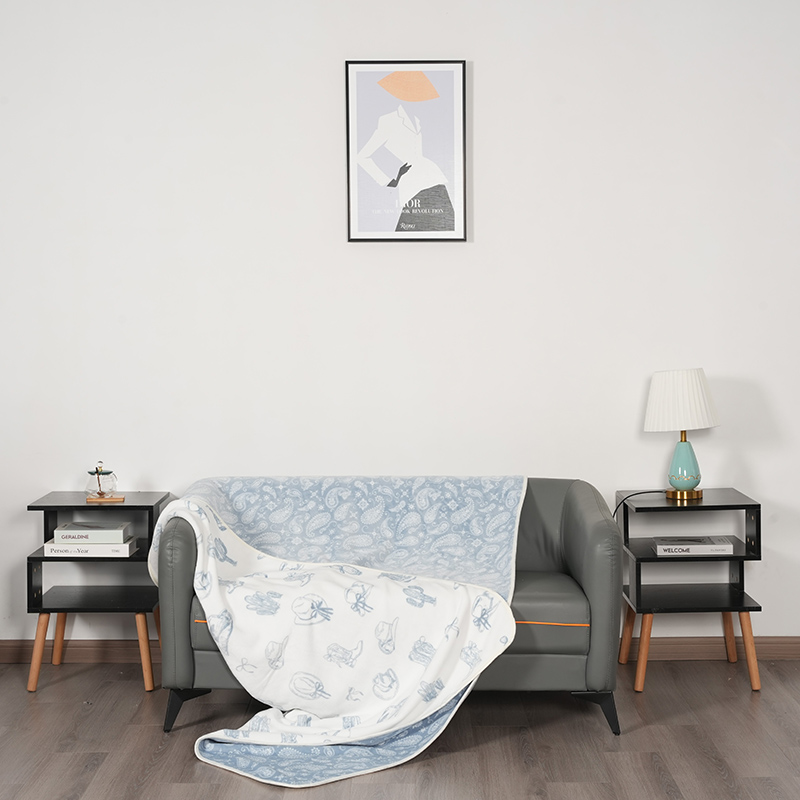
 Flannel Double-Layer Blanket for Lightweight Cold-Weather WarmthA double-layer flannel blanket trapping still air for efficient insulation, offering strong warmth without the heavy feel of a thick quilt.View Product →
Packing, Care, and Retail Readiness
How a blanket is packed tells the buyer whether it is a giveaway or a product. Flat folding with a printed band, rolling into a poly bag with a hang tag, or vacuum packing for long sea freight are all routine requests, and each one changes the carton dimensions.
Care instructions should be printed, not assumed. Wash cold, tumble low, and skip fabric softener, which coats the pile and dulls thread over time. On the reverse of the embroidery, a small fusible backing keeps the stitch line from scratching skin and prevents pulls during washing. If the blanket is heading to a retail shelf, add a barcode and a fibre content label before the cartons are sealed.
Working With the Mill That Makes the Fabric
Because we knit and finish fleece in-house and also cut and sew the finished blankets, embroidery decisions are made a few metres from where the fabric is produced, not two suppliers away. If a stitch density is too heavy for a particular pile, we can change the fabric rather than argue about the logo. That is also how we have been able to supply supermarkets and cross-border brands on repeat programmes, where consistency between shipments matters more than any single order.
You can see the constructions we produce in our blanket range, including bound edge, folded edge and double-layer builds in flannel, polar fleece and coral fleece.
If you already have artwork and a rough idea of quantity, the fastest path is to send both and let us suggest the fabric and edge finish that suit them. A blanket that is comfortable on a cold bench, holds its logo after a season of washing, and arrives packed the way your channel expects is not complicated to make. It just has to be planned in the right order.