

 English
  Español
  عربى
عربى We are a national high-tech enterprise. At present, there are many kinds of self-woven and cooperatively processed fabrics, including microfiber warp-knitted towel cloth, weft-knitted towel cloth, coral fleece, etc.

Quilted Duvet Manufacturers
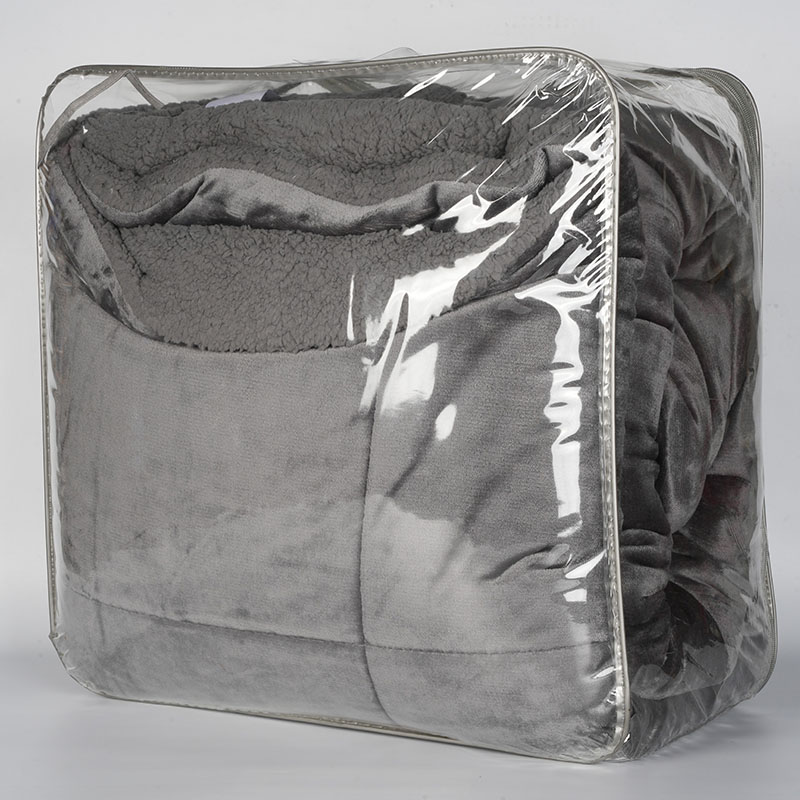
The Quilted Duvet is a bedding product designed specifically for the fall and winter seasons, offering exceptional warmth and convenience, especially for those in cold, damp weather or areas without central heating. Combining the functions of a quilt and blanket, this all-in-one warmth solution provides a soft and comfortable sleep experience during the coldest months, making it particularly suitable for homes in southern China and similar climates. It effectively blocks cold air from the mattress, ensuring a warm sleeping environment throughout the fall and winter, avoiding the discomfort of a cold bed surface.
It requires no additional cover, making it incredibly convenient to use. Simply remove and use, and wash the entire piece without removing the cover, saving time and effort. It's ideal for young people, busy families, or anyone seeking simple, low-maintenance bedding.
The Quilted Duvet is also a great alternative for guest room bedding. When guests arrive, it provides a fresh, warm, and ready-to-use bedding, allowing guests to enjoy a comfortable sleep without the worry of cleaning. It's both convenient and practical.
Product Categories
Recommended Products

Shaoxing DingYi Textile Co., Ltd.
 Contact Us
About Us
Shaoxing DingYi Textile Co., Ltd. is a China Quilted Duvet Manufacturers and Flannel Quilt Factory. And is located in China Textile City,Shaoxing, Zhejiang, mainly for finished products, fabric factory, all year round production of flannel, coral velvet, sherpa and other blankets and fabrics. Adopt assembly line production, have a professional production quality inspection team. Our products are sold all over the world, for long time to supply supermarkets,and we also provide supplies for the brand suppliers of Amazon, the cross-border e-commerce business. We sincerely look forward to cooperating with you and hope that we can work together for win-win cooperation.
Contact Us
Pay attention to our latest news and exhibitions
READ OUR BLOG
-
Apr 06, 2026
Why Should You Choose a Flannel Quilted Duvet Over Regular Duvets?
In modern bedding markets, consumers are no longer satisfied with basic functionality—they expect products that combine comfort, durability, thermal performance, and aesthetic appeal. The Flannel Quilted Duvet has emerged as a preferred choice for both residential users and commercial buyers such as hotels and healthca...
READ MORE -
Mar 31, 2026
What Is a Folded Edge Blanket and Why Is It Better Than Traditional Blankets?
In today’s competitive textile and home furnishing market, product differentiation often lies in details such as craftsmanship, durability, and user comfort. One such innovation that has significantly improved blanket performance is the Folded Edge Blanket. Unlike conventional blankets that rely on simple overlock stit...
READ MORE -
Mar 23, 2026
Folded Edge Blanket: Who Is Actually Paying for the Process, and Who Is Just Using the Label?
What Exactly Does "Folding" Refer to as a Process in a Folded Edge Blanket, and How Does It Differ from Standard Binding? Defining the Folded Edge: A Process Built Into the Fabric Itself When a blanket is described as a folded edge blanket, the term refers to a specific finishing method in which the outer edge of the b...
READ MORE
Quilted Duvet Industry Knowledge
What Is a Quilted Duvet and Why Should You Choose One?
A good night's sleep starts long before you close your eyes it begins with what you choose to sleep under. Among the many bedding options available today, the quilted duvet has earned a reputation as one of the most reliable, comfortable, and versatile choices for any bedroom.
At its core, a quilted duvet is a type of bed covering that combines an insulating fill typically down, down alternative, polyester fiberfill, or wool with a stitched outer shell. The defining feature is the quilting itself: a pattern of stitches that runs through both the outer fabric and the fill, securing the interior material in place and dividing the duvet into a series of channels, squares, or decorative sections. This stitching is not merely decorative. It serves the essential functional purpose of preventing the fill from shifting, bunching, or migrating to one side of the duvet during use or washing.
The result is a bedding product that maintains even fill distribution across its entire surface, night after night and wash after wash. When you pull a quilted duvet over yourself, you are covered by a consistent, uninterrupted layer of warmth not a product with thin spots where the fill has shifted away and thick clumps where it has gathered. This consistency is one of the primary reasons quilted duvets have become a preferred choice for both consumers and bedding professionals worldwide.
The Origins and Evolution of Quilted Bedding
Quilting as a textile technique has been practiced for thousands of years across many cultures, from ancient Egypt and China to medieval Europe. Originally developed as a practical method for adding warmth and durability to garments and bed coverings, quilting evolved over centuries into both a functional craft and an art form. The quilted duvet as we know it today is the modern industrial descendant of this long tradition combining time-tested construction principles with contemporary materials and manufacturing technology.
Today, quilted duvets are produced on a global scale. Manufacturing centers in China's textile industry particularly in Shaoxing, Zhejiang, home to one of the world's largest textile trading hubs have played a significant role in making high-quality quilted bedding accessible to consumers around the world. Producers like Shaoxing DingYi Textile Co., Ltd., a professional quilted duvet manufacturer and flannel quilt factory based in China Textile City, Shaoxing, operate assembly line production with dedicated quality inspection teams to supply supermarkets, retail chains, and international e-commerce brands year-round with consistent, well-constructed products.
Why Choose a Quilted Duvet?
The case for choosing a quilted duvet comes down to several practical and sensory advantages that few other bedding types can match simultaneously.
First, there is the matter of fill stability. As mentioned, the quilting stitches lock the fill in place, ensuring that the warmth distribution remains uniform throughout the life of the product. This is a particularly important advantage over non-quilted alternatives, which often require regular shaking and redistributing to prevent cold spots from developing.
Second, quilted duvets tend to be significantly easier to care for than their non-quilted counterparts. The secured fill is far less likely to clump or mat inside the shell during machine washing and drying, meaning the duvet comes out of the laundry looking and performing much as it did before washing. This practical durability is a major selling point for busy households, hospitality businesses, and anyone who values low-maintenance bedding.
Third, quilted duvets offer an appealing aesthetic. The quilted surface whether it features classic box squares, elegant diamond patterns, channel stitching, or more ornate designs has a structured, finished appearance that looks polished and intentional in any bedroom setting. A well-made quilted duvet does not need to be hidden under a duvet cover to look presentable; many are designed to be displayed as a decorative bedding layer in their own right.
Finally, quilted duvets are available across a wide range of fills, fabric shells, and warmth ratings, making it possible to find an option perfectly suited to your climate, sleep preferences, and budget. From lightweight summer versions to deeply insulating winter quilts, the quilted duvet category offers genuine versatility without sacrificing the core comfort benefits that make this style so popular.
What Is the Difference Between a Quilted Duvet and a Regular Duvet?
The terms "duvet" and "quilted duvet" are sometimes used interchangeably in everyday conversation, but they describe meaningfully different products. Understanding the distinction helps you make a more informed purchasing decision and sets realistic expectations for how each type of bedding will perform over time.
Construction: Stitched vs. Unstitched
The most fundamental difference lies in the construction method. A standard duvet often called a comforter in North America is essentially a large fabric envelope filled with insulating material. In many basic duvets, the fill is simply inserted into the shell and the edges are sewn closed, with little or no internal stitching to hold the fill in position. Some higher-end duvets use baffle-box construction, where fabric walls are sewn between the inner and outer shells to create three-dimensional chambers for the fill but this is a different technique from surface quilting and is most commonly found in down-filled products.
A quilted duvet, by contrast, is stitched through all layers top shell, fill, and bottom shell creating a unified, integrated structure. This through-quilting is what gives the surface its characteristic textured pattern and what prevents the fill from moving around inside. The stitching lines essentially divide the duvet into a grid of contained sections, each holding its share of fill securely in place.
Fill Distribution and Performance Over Time
In a standard unstitched duvet, the fill is free to move within the shell. With a high-loft down fill, this movement is managed naturally by the fill's own tendency to expand and redistribute experienced down duvet users know to shake and fluff their duvet regularly to maintain even coverage. However, with synthetic polyester fills or blended materials, unrestrained fill migration is a more persistent problem. Over time and with repeated washing, synthetic fill in an unstitched duvet tends to clump and compact in certain areas, creating an uneven product with noticeably thin and thick patches.
A quilted duvet eliminates this problem by design. The fill cannot migrate because the quilting stitches hold it in its designated sections. This means that a quilted duvet with a polyester or blended fill will maintain a far more consistent performance profile over years of use compared to an equivalent unstitched product. For consumers who prioritize longevity and value for money, this is a decisive advantage.
Weight, Drape, and Tactile Feel
Standard duvets and quilted duvets also differ in how they feel in use. An unstitched duvet particularly one filled with premium down tends to have a soft, fluid drape that molds itself loosely around the body. The fill can loft freely and the shell moves with minimal resistance, creating a cloud-like sensation that many sleepers find deeply comfortable.
A quilted duvet has a slightly more structured feel due to the stitching. The quilted sections have a defined shape and the surface has a gentle texture. Many sleepers find this structure reassuring and comfortable in its own right the duvet feels purposeful and consistent rather than amorphous. The choice between the two ultimately comes down to personal preference, but it is worth understanding that the quilted construction changes the tactile character of the product in subtle but noticeable ways.
Shell Fabric and Visual Appearance
Both standard and quilted duvets can be made with a wide variety of shell fabrics cotton, polyester, microfiber, flannel, and blended materials are all common. However, the visual presentation of the two types differs significantly. A standard duvet in a plain shell has a flat, relatively featureless surface that is typically designed to be used inside a duvet cover. A quilted duvet, by contrast, has a visually interesting surface texture created by the quilting pattern, which gives it a more finished, decorative appearance.
Flannel-shell quilted duvets are a popular example of how shell fabric choice amplifies the appeal of quilted construction. The soft, brushed surface of flannel combined with the structured pattern of the quilting creates a product that feels warm and tactilely appealing from the first touch making it a natural choice for autumn and winter bedding ranges. Many manufacturers specializing in flannel quilts focus specifically on this combination, producing products that deliver both functional warmth and aesthetic appeal as a complete bedding statement.
Washing and Maintenance
From a practical standpoint, quilted duvets are generally easier to maintain than standard unstitched duvets, particularly those with synthetic fills. The contained fill structure holds up well to machine washing, and the quilted sections help the fill dry more evenly and thoroughly in a domestic dryer. Standard duvets with loose fill often require more careful handling during washing particularly down-filled versions, which need to be washed at low temperatures and dried very thoroughly to prevent mildew and fill degradation.
For households where bedding is washed frequently families with children, allergy sufferers who need to launder bedding regularly, or hospitality businesses with high turnover the wash-and-dry resilience of a well-made quilted duvet is a significant practical benefit that adds meaningful value over the product's lifetime.
How Does a Quilted Duvet Improve Comfort and Warmth?
Comfort and warmth are the two properties that most consumers prioritize when selecting bedding, and a well-designed quilted duvet delivers on both in ways that are worth understanding in detail. The improvements quilted construction offers are not incidental they are built into the fundamental design of the product.
Even Warmth Distribution Across the Sleeping Surface
The most direct way a quilted duvet improves warmth is through even fill distribution. As discussed in the previous section, the quilting stitches prevent fill migration, which means that every part of the duvet's surface provides the same level of insulation. There are no cold spots at the edges where fill has shifted toward the center, and no overheated zones where fill has bunched up. The sleeper is wrapped in a consistent thermal layer from shoulders to feet, which supports the body's natural temperature regulation during sleep.
This consistency is particularly valuable for people who move around during sleep. A restless sleeper who frequently shifts position is less likely to pull the duvet out of alignment when using a quilted version, because the fill cannot redistribute independently of the shell. The duvet retains its even coverage regardless of how much it is moved, folded, or bunched during the night.
Thermal Efficiency of Quilted Channels
The quilting pattern itself contributes to the thermal performance of the duvet in a less obvious but equally important way. By dividing the fill into discrete sections, the quilting creates a series of small, contained air pockets within the fill itself. Trapped air is one of the most effective thermal insulators available it is, after all, the same principle that makes down such an outstanding insulating material. The more effectively a bedding product traps and holds still air, the better its insulating performance per unit of weight.
Quilted sections, by containing the fill in defined areas, help maintain the loft and integrity of the fill material. This means the fill continues to trap air effectively even after repeated compression during use and washing. A flat, over-compressed fill with no structural support loses its loft and therefore its insulating capacity over time but the quilted framework helps the fill maintain its intended structure and performance for longer.
The Role of Fill Material in Comfort
While quilted construction significantly improves the performance of any fill material, the choice of fill itself plays a major role in determining the overall comfort and warmth of the finished duvet. The most common fill options for quilted duvets include polyester fiberfill, down alternative clusters, natural down and feather blends, cotton, and wool.
Polyester fiberfill is by far the most widely used fill in mass-market quilted duvets. It is hypoallergenic, machine washable, affordable, and available in a range of loft levels that allow manufacturers to produce products across a full warmth rating spectrum. Modern hollow-fiber and microfiber polyester fills have improved significantly in recent years, offering a softer, more down-like feel while retaining all the practical advantages of synthetic material.
Down and down alternative fills offer superior loft and a lighter weight-to-warmth ratio than synthetic fills, but they typically command a higher price point. In a quilted duvet, down fill benefits from the additional structural support of the quilting, which helps prevent the fill from shifting and maintains even coverage an important advantage given how easily down can migrate in unstructured shells.
Wool and cotton fills appeal to consumers seeking natural, breathable materials. Wool in particular is prized for its natural temperature-regulating properties it keeps sleepers warm in cold weather but wicks moisture and remains comfortable in warmer conditions, making it an excellent fill choice for quilted duvets intended for year-round use.
Shell Fabric and Its Impact on the Sleep Experience
The outer shell of a quilted duvet is in direct contact with the sleeper's skin, which makes its fabric choice a critical factor in the overall comfort experience. Cotton percale and sateen shells are classic choices that offer breathability and a crisp, smooth feel. Microfiber and polyester shells are softer to the touch, more affordable, and highly durable. Flannel shells brushed on one or both sides to raise a fine, warm nap are particularly popular for winter-weight quilted duvets, offering an immediate soft warmth that makes climbing into bed on a cold night a genuinely pleasurable experience.
The combination of a flannel shell with a well-distributed polyester or down alternative fill, secured by quilting stitches, represents one of the most popular and commercially successful quilted duvet formulas in the global bedding market. It balances tactile comfort, thermal performance, durability, and accessibility in a way that appeals to a very broad range of consumers from budget-conscious shoppers to quality-focused buyers who simply want a reliable, comfortable product that will perform consistently for years.
Choosing the Right Warmth Rating
Most quality quilted duvets are rated by warmth level commonly expressed as a tog rating in the UK and Europe, or described in general terms (lightweight, medium, warm, extra warm) in other markets. Selecting the appropriate warmth rating for your climate and sleeping preferences is one of the most important factors in achieving genuine sleeping comfort.
A lightweight quilted duvet (around 4–7 tog) is well suited to warmer climates or summer use, providing just enough coverage to feel comfortable without causing overheating. A medium-weight version (9–10.5 tog) is a versatile choice for year-round use in temperate climates. A heavyweight quilted duvet (13.5 tog and above) is designed for cold winters and sleepers who consistently feel cold at night. Some manufacturers offer "all-seasons" systems two quilted duvets of different weights that can be fastened together for maximum winter warmth or used separately in milder conditions.
Understanding fill weight, fill power, and tog ratings before purchasing helps ensure that your quilted duvet delivers the thermal comfort you are looking for, rather than leaving you too hot in summer or insufficiently warm in winter. Reputable manufacturers including those supplying global retail and e-commerce channels from production bases in Shaoxing and the broader Zhejiang textile region typically provide clear warmth rating guidance alongside product specifications, making it easier to make an informed selection.
Long-Term Comfort: Durability and Value
Comfort is not just about how a duvet feels on the first night it is about how consistently it performs over months and years of regular use. A quilted duvet's construction makes it inherently more durable than many comparable unstitched alternatives. The stitching reinforces the shell, reduces stress on the seams during washing, and keeps the fill performing at its best for longer. With proper care washing at the recommended temperature, drying thoroughly, and storing clean a well-made quilted duvet can remain a comfortable, effective bedding choice for many years.
This durability translates directly into value. A slightly higher initial investment in a quality quilted duvet from a reputable manufacturer is typically far more cost-effective over time than repeatedly replacing cheaper, poorly constructed alternatives that lose their shape, warmth, and tactile appeal within a season or two. Whether you are furnishing a single bedroom or sourcing bedding at scale for a retail or hospitality business, the combination of consistent performance, ease of maintenance, and long service life makes the quilted duvet one of the most sensible and satisfying investments in home comfort available today.

-

3rd Floor, Building 4, Zhongsu Packaging, No. 301 Tanggong Road, Yuecheng District, Shaoxing City, Zhejiang Province
-

+86-13456572618
-


