

 English
  Español
  عربى
عربى We are a national high-tech enterprise. At present, there are many kinds of self-woven and cooperatively processed fabrics, including microfiber warp-knitted towel cloth, weft-knitted towel cloth, coral fleece, etc.

Bound Edge Blanket Manufacturers
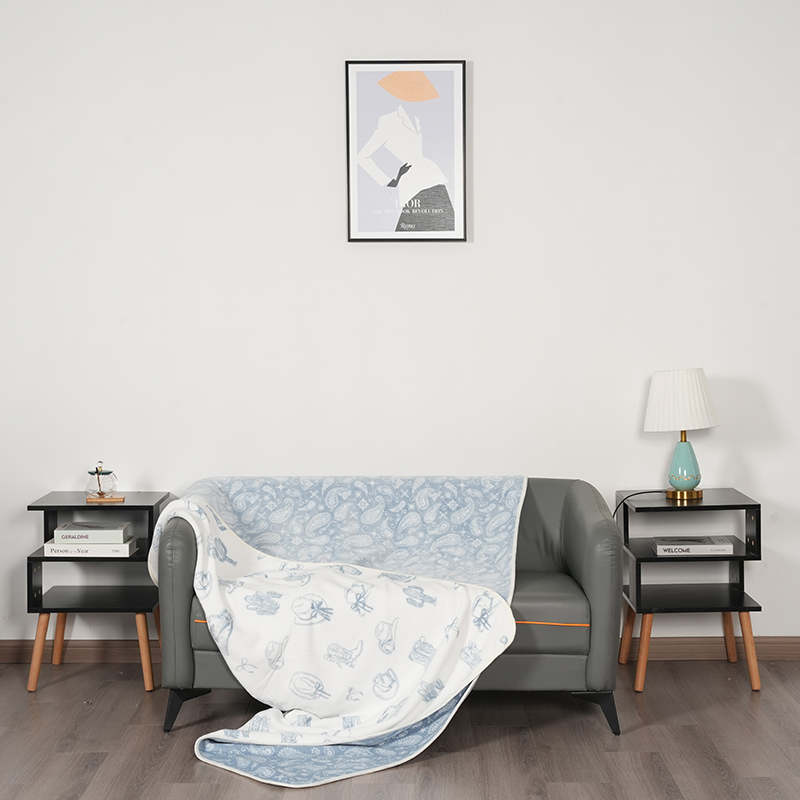
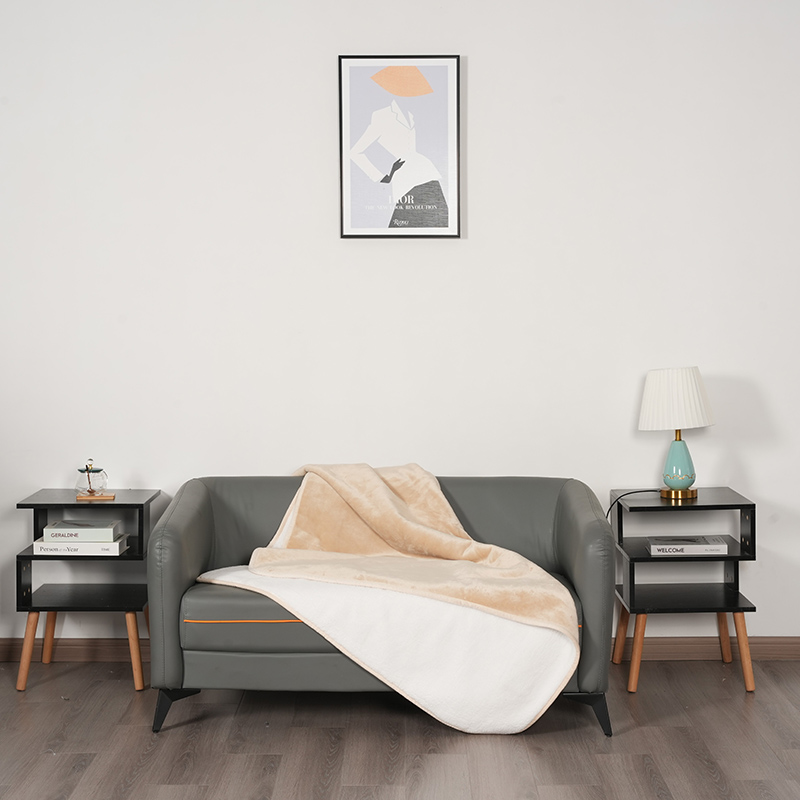
The Bound Edge Blanket is a versatile blanket that combines comfort, durability, and aesthetics, perfect for a variety of situations. Its exquisitely bound edge adds durability and a refined look, perfect for adding to your home decor.
For home use, the Bound Edge Blanket effectively shields against the cold, providing a wonderful sleep experience. Its soft feel and warmth make it a cozy bedside companion, especially on chilly nights. It's also a great couch blanket, easily draped over for warmth and comfort while watching TV, reading, or relaxing. For children, the Bound Edge Blanket's high-quality, fiber-free material makes it ideal for infants and toddlers.
In air-conditioned rooms, knees and legs can easily get cold, and a lightweight blanket can help keep you warm and comfortable during long workdays. For outdoor activities like camping, picnics, or watching sporting events, the Bound Edge Blanket's lightweight design makes it a convenient and portable companion for warmth. Whether used as a seat cushion or a thermal blanket, it effectively shields you from the cold, enhancing your comfort and enjoyment.
The Bound Edge Blanket also makes an ideal gift. Its exquisite packaging and high-quality materials make it a thoughtful gift for elders, friends, or families with newborns.
Product Categories
Recommended Products

Shaoxing DingYi Textile Co., Ltd.
 Contact Us
About Us
Shaoxing DingYi Textile Co., Ltd. is a China Bound Edge Blanket Manufacturers and Bound Edge Blanket Factory . And is located in China Textile City,Shaoxing, Zhejiang, mainly for finished products, fabric factory, all year round production of flannel, coral velvet, sherpa and other blankets and fabrics. Adopt assembly line production, have a professional production quality inspection team. Our products are sold all over the world, for long time to supply supermarkets,and we also provide supplies for the brand suppliers of Amazon, the cross-border e-commerce business. We sincerely look forward to cooperating with you and hope that we can work together for win-win cooperation.
Contact Us
Pay attention to our latest news and exhibitions
READ OUR BLOG
-
Apr 06, 2026
Why Should You Choose a Flannel Quilted Duvet Over Regular Duvets?
In modern bedding markets, consumers are no longer satisfied with basic functionality—they expect products that combine comfort, durability, thermal performance, and aesthetic appeal. The Flannel Quilted Duvet has emerged as a preferred choice for both residential users and commercial buyers such as hotels and healthca...
READ MORE -
Mar 31, 2026
What Is a Folded Edge Blanket and Why Is It Better Than Traditional Blankets?
In today’s competitive textile and home furnishing market, product differentiation often lies in details such as craftsmanship, durability, and user comfort. One such innovation that has significantly improved blanket performance is the Folded Edge Blanket. Unlike conventional blankets that rely on simple overlock stit...
READ MORE -
Mar 23, 2026
Folded Edge Blanket: Who Is Actually Paying for the Process, and Who Is Just Using the Label?
What Exactly Does "Folding" Refer to as a Process in a Folded Edge Blanket, and How Does It Differ from Standard Binding? Defining the Folded Edge: A Process Built Into the Fabric Itself When a blanket is described as a folded edge blanket, the term refers to a specific finishing method in which the outer edge of the b...
READ MORE
Bound Edge Blanket Industry Knowledge
A Bound Edge Blanket refers to a type of blanket featuring edges that are finished by wrapping them with an additional layer of fabric—such as binding tape, satin ribbon, or a material matching the blanket body—which is then stitched securely in place. This technique differs from a "Folded Edge" finish; binding emphasizes a "covering structure" that not only enhances the product's structural integrity but also boosts its aesthetic appeal. Consequently, this method is widely adopted within the mid-to-high-end market and for functional blankets.
Core Features of Bound Edge Blankets
The most prominent feature of a Bound Edge Blanket lies in the superior integrity of its edge structure. By incorporating a distinct binding material around the perimeter of the blanket, a "protective layer" is formed along the edges, thereby enhancing the product's overall quality.
In terms of aesthetics, the binding typically utilizes contrasting colors or high-sheen materials (such as satin ribbon). This creates a distinct visual border that lends the product a greater sense of depth and sophisticated design appeal. This structural style is particularly prevalent in baby blankets, gift blankets, and high-end home textile products.
Regarding durability, the edges of a Bound Edge Blanket possess greater strength than those of blankets finished with standard overlocking or simple folded hems. Because the edges feature an additional structural layer, they effectively minimize issues such as fraying, splitting, or loose threads, making them especially suitable for items that undergo frequent washing or are subject to heavy use.
In terms of tactile quality, certain binding materials (such as satin) offer a silky-smooth touch that enhances the user experience. This is particularly important in products for infants and children, where a soft, safe, and gentle binding design is paramount.
Common Material Structures
A Bound Edge Blanket typically consists of two components: the "main fabric" and the "binding material." The specific combination of these elements determines the product's market positioning and price point.
Regarding the main fabric, materials commonly used within the industry include:
- Flannel: Soft and fine-textured; suitable for the mid-range market.
- Coral Velvet: Offers excellent thermal insulation; ideal for autumn and winter products.
- Sherpa: Features a thick, plush texture; frequently used in double-layer composite blankets.
- Microfiber: Lightweight and durable; well-suited for mass production.
Common choices for binding materials include:
- Polyester Binding Fabric: Low cost and good durability.
- Satin Binding: High-gloss finish; often used for gift blankets or baby blankets.
- Self-Binding (Same-Fabric Binding): Creates a unified aesthetic; suitable for minimalist designs.
In actual production, companies like Shaoxing DingYi Textile Co., Ltd.—which possess integrated capabilities spanning both fabric manufacturing and finished product assembly—can flexibly combine different materials to produce multi-layer or composite Bound Edge Blankets. For instance, they might create a double-layer blanket featuring a flannel-and-Sherpa combination finished with satin binding, thereby enhancing the product's added value.
Production Process
The production process for Bound Edge Blankets is more complex than that of standard blankets, requiring more sophisticated equipment and stricter process controls.
The main steps include:
- Fabric Preparation: Selecting the appropriate main fabric based on weight (gsm) and style.
- Cutting: Precisely cutting the main body of the blanket to the specified dimensions.
- Binding Preparation: Cutting the binding fabric into strips and pre-folding them.
- Binding Sewing: Using specialized binding machines to wrap the binding material around the blanket's edges while simultaneously stitching it in place.
- Reinforcement: Applying reinforcement stitching to critical areas (such as the four corners) to prevent tearing or unraveling.
- Finishing: Including processes such as brushing, heat-setting, and removing loose fibers.
- Full Inspection: Inspecting the uniformity of the stitching and the flatness of the edges.
In large-scale production, assembly-line operations are crucial. Shaoxing DingYi Textile Co., Ltd. employs a standardized assembly-line production system, supported by a professional quality control team. This approach ensures high efficiency while guaranteeing that every binding is uniform and secure—a critical factor, particularly for export orders.
Application Scenarios and Market Positioning
The Bound Edge Blanket holds a distinct application niche across various markets:
In the infant and child market, the Bound Edge Blanket is practically a standard staple. Thanks to its soft, non-irritating edges—which are also resistant to fraying—it is widely utilized for swaddling blankets and children's throws.
In the home furnishings market, the Bound Edge Blanket tends toward the mid-to-high-end segment. It is well-suited for decorative purposes—such as sofa throws or bed-end blankets—emphasizing both aesthetic design and quality craftsmanship.
In the gifts market, blankets featuring satin binding are frequently chosen as holiday presents or promotional giveaways due to their refined and elegant appearance.
In the hospitality and aviation sectors, certain high-end establishments and airlines also incorporate Bound Edge Blankets to elevate the overall quality of their service offerings.
In the cross-border e-commerce sector, demand for Bound Edge Blankets remains stable within European and North American markets, with sales performance proving particularly strong during the autumn and winter seasons. For instance, Shaoxing DingYi Textile Co., Ltd.—a long-standing supplier to global clients and Amazon brand sellers—features a diverse range of Bound Edge Blanket styles within its product portfolio, underscoring the category's solid foundation within the international market.
Key Quality Control Points
Quality control for Bound Edge Blankets focuses primarily on the "edge":
- Edge Binding Security: Stitching must be uniform, free from skipped stitches or broken threads.
- Edge Binding Flatness: The edges must remain flat, without any waviness or distortion.
- Material Compatibility: The binding material and the main fabric body must be consistent in terms of shrinkage rate and color fastness.
- Safety Standards: Particularly for infant and children's products, compliance with international safety regulations is mandatory.
- Wash Stability: After multiple wash cycles, the binding must not wrinkle or detach.
Factories possessing a mature quality inspection system are more likely to secure a place within long-term supply chains. For instance, Shaoxing DingYi Textile Co., Ltd. employs a professional quality inspection team that conducts comprehensive testing—from raw materials to finished products—enabling them to meet the rigorous requirements of supermarket chains and cross-border e-commerce clients.
Industry Development Trends
The future development of Bound Edge Blankets is primarily characterized by the following directions:
In terms of design: An increasing number of brands are beginning to prioritize "edge design," utilizing techniques such as contrasting trim or printed edging to enhance product distinctiveness and brand recognition.
In terms of materials: Eco-friendly edging materials—such as recycled polyester—are gradually gaining market favor, aligning with broader trends toward sustainable development.
In terms of functionality: Bound Edge Blankets are evolving toward multi-functional designs, incorporating features such as dual-sided construction with differing textures, thickened structures, or functional fabrics (e.g., antimicrobial or anti-static materials).
In terms of supply chain: Companies possessing integrated production capabilities hold a distinct competitive advantage. Enterprises like Shaoxing DingYi Textile Co., Ltd.—which combine both fabric manufacturing and finished product assembly capabilities, and have a long history of serving global markets—are better positioned within the industry to foster stable partnerships and achieve scalable expansion.
In terms of market channels: Cross-border e-commerce remains a key area of growth; Bound Edge Blanket products that are standardized, cost-effective, and offer customization options are most likely to gain favor among overseas customers.

-

3rd Floor, Building 4, Zhongsu Packaging, No. 301 Tanggong Road, Yuecheng District, Shaoxing City, Zhejiang Province
-

+86-13456572618
-

client
Copyright © Shaoxing DingYi Textile Co., Ltd. Rights Reserved

